


Understanding your Charity Constitution: A Beginner's Guide

Running an early years and childcare setting as a charity is rewarding, but it also comes with responsibilities. One of the most important (and often misunderstood) documents your setting has is its charity constitution.
If you’re a trustee, committee member, or manager and you’ve ever thought “I know we have one… but I’m not quite sure what it says”, you’re not alone. This blog explains what a charity constitution is, why it matters, and how it affects your day-to-day decision-making.
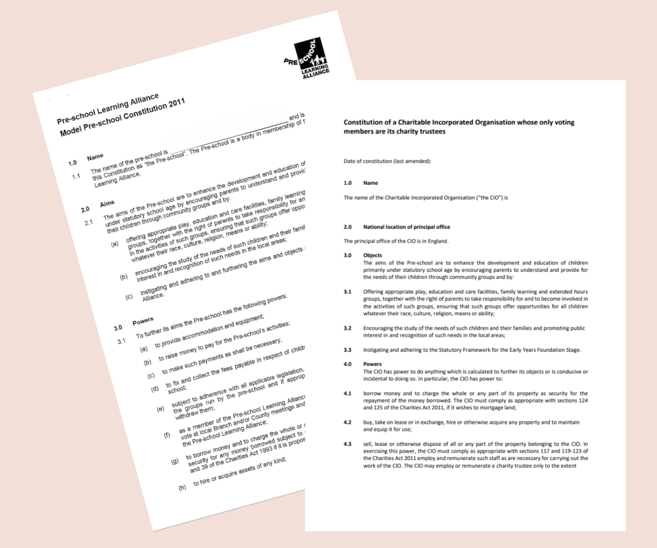
What Is a Charity Constitution?
A charity constitution is the governing document of your charity. Think of it as the rulebook that explains:
Why your charity exists
How it is run
Who makes decisions
What powers and responsibilities trustees / committee members have
For early years and childcare settings, the constitution often reflects your role in supporting children’s learning, development, and wellbeing within your community.
If your setting is registered with the Charity Commission for England and Wales, you are legally required to have a constitution (or another form of governing document such as a trust deed or a Memorandum and Articles of Association).
Why Is a Constitution Important?
Your constitution is not just paperwork — it has real, practical importance.
1. It Sets Out Your Charitable Purpose
Your constitution clearly states what your charity exists to do, usually in a section called “Objects”.
For example, this might include:
Advancing education for children under five
Supporting families through accessible early years provision
Promoting equality, inclusion, or community benefit
Everything your setting does should link back to these objects.
2. It Defines How Decisions Are Made
The constitution explains:
Who the trustees or committee members are
How many are needed to make decisions
How meetings are called and run
How votes are taken
This helps prevent confusion, conflict, or decisions being made by people who don’t have the authority to do so — which is especially important in volunteer-led early years settings.
3. It Protects Trustees and Committee Members
Trustees have legal duties, and the constitution helps clarify:
What trustees are responsible for
What powers they have (for example, employing staff or managing finances)
When they must seek approval from members or the Charity Commission
Following your constitution helps trustees show they are acting properly and in the best interests of the charity.
4. It Helps with Compliance and Inspections
Your constitution supports compliance with:
Charity Commission requirements
Funding applications and grant conditions
Local authority expectations
Good governance standards
Inspectors, funders, and banks may ask to see it — and they will expect your setting to be operating in line with it.
5. It Provides Stability During Change
Early years settings often experience frequent change — new trustees, staff turnover, or shifts in funding. Your constitution provides continuity by ensuring:
Clear handovers
Consistent decision-making
Protection of the charity’s purpose even when people change
What Does a Typical Constitution Include?
While constitutions vary, most early years charity constitutions include:
Name of the charity
Charitable objects
Powers (what the charity can do to achieve its objects)
Trustees or management committee rules
Membership rules (if applicable)
Meeting procedures
Financial controls
Amendment rules
Dissolution clause (what happens if the charity closes)
Who Should Know the Constitution?
At a minimum:
All trustees or committee members should read and understand it
The chair and treasurer should be very familiar with it
The manager or leader should understand how it affects operations
It’s good practice to review the constitution regularly — especially when making big decisions or planning changes.
What If Your Constitution Is Out of Date?
Many early years charities are still using constitutions written years ago. If your constitution:
No longer reflects how your setting operates
Contains outdated language or structures
Limits your ability to fundraise or manage staff
…it may need to be amended, with approval from members and, in some cases, the Charity Commission. If you are using a Pre-school Learning Alliance (now the Early Years Alliance) the most recent version is that dated 2011. If you wish to make changes to their document you need to contact the EYA for their approval.
Final Thoughts
Your charity constitution isn’t just a formality — it’s the foundation of how your early years setting is governed. Understanding it helps you:
Stay compliant
Make confident decisions
Protect your setting’s future
Focus on what really matters: supporting children and families
If you haven’t looked at your constitution in a while, now is a great time to dust it off and get familiar with it again.
Governing documents is one area that is covered in my Trustee Roles and Responsibilities Workshops. If you're a new trustee/committee member trying to get your head around what you should be doing you can register for a future workshop here.



Comments